
SUPERSTAR SMTOWN
Dalcomsoft, Inc.Music
4.42.97K Reviews
- Version
- 3.32.0
- Installs
- 5.00M
- Age Rating
- Everyone
Screenshots
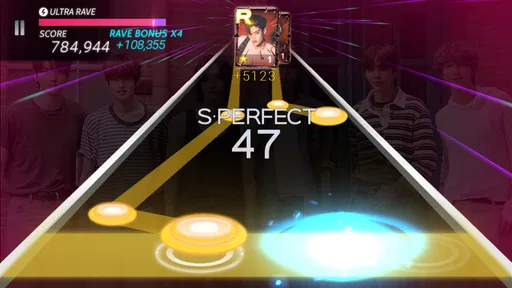
Our Review of SUPERSTAR SMTOWN
 Analysis by Appyee
So, I recently got my hands on SUPERSTAR SMTOWN, and let me tell you, it's a wild ride for anyone who's a fan of K-pop or just loves rhythm games. If you're familiar with the genre, this one takes it up a notch with a unique blend of music and style directly from the SM Entertainment label. Let's dive into what makes this app tick.
Getting Started with SUPERSTAR SMTOWN
First off, setting up SUPERSTAR SMTOWN is a breeze. After downloading the app, you’re greeted by a sleek interface filled with vibrant colors and images of your favorite SM artists. It's super intuitive, so you won't have to fumble around trying to figure out where everything is. Plus, the tutorials are really helpful if you're new to rhythm games, guiding you step-by-step through the basics.
Early goals and first sessions
The game makes the most sense when I treat a session as a small practice loop rather than a long run: choose a familiar track, focus on staying in time, then try a more demanding chart when the easier one feels comfortable. That gives a new player a simple goal without requiring instant mastery. If you already know the songs, that familiarity can make the first attempts feel welcoming, though the notes still need attention; knowing a chorus by heart is not the same as hitting every cue accurately.
For a realistic everyday use, I’d play a song or two during a short break, then stop while I still have the patience to concentrate. Rhythm games reward attention, and squeezing in a difficult track while distracted can turn a relaxing pause into a string of missed notes. A useful habit is to repeat one song when you want to improve a specific timing pattern, rather than constantly switching tracks and judging progress only by the score.
Once you're in, you'll notice the game offers a pretty extensive library of tracks. We're talking everything from EXO and Red Velvet to SHINee. It's like having your own K-pop concert right in your pocket. The game constantly updates with new songs, so you'll never get bored.
The Gameplay Experience
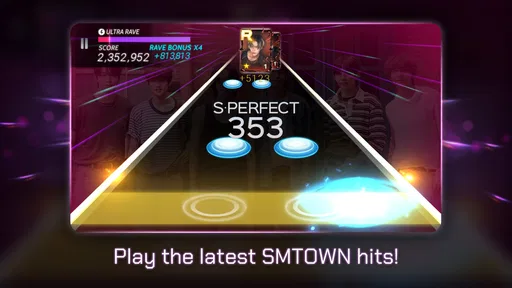
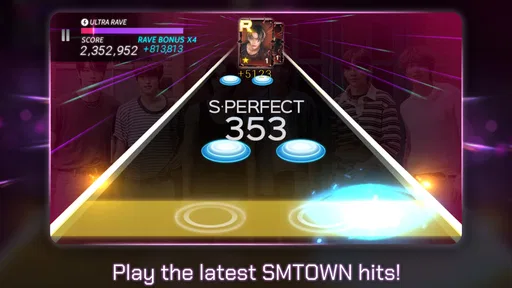
Now, let's talk about the gameplay. It's your classic rhythm game setup, where you tap, hold, and swipe to the beat of the music. But what sets it apart is the level of precision and timing required. It can get pretty intense, especially on higher difficulty levels, but that’s exactly what makes it so addictive.
One thing I love is how each song has different difficulty levels, from easy to hard. It’s a smart way to gradually build your skills while keeping things challenging. And if you've got a competitive streak, you'll love the leaderboard feature, where you can see how you stack up against other players. Trust me, there's nothing quite like the rush of beating your previous high score or climbing up the ranks.
Reading progress without chasing every score
For me, a better progress signal than one standout result is whether a chart that used to feel awkward becomes manageable. I pay attention to the sections where my timing slips and whether I can finish a familiar song with fewer careless misses. That is a more useful measure of improvement than comparing every run with another player, especially when the leaderboard turns a personal practice session into a competition I did not actually want.
The difficulty choice also gives the game room to serve two different moods. An easier chart suits a casual session or a player still learning the timing, while a harder setting is there for someone who enjoys precision and repetition. I would not treat moving up immediately as the only sign of progress: repeating a comfortable level can help build consistency, and a tougher chart is more satisfying when I can focus on the music instead of feeling overwhelmed by the notes.
Compared with a general rhythm game built around a broad mix of music, this one has a clear identity: its attraction is the SMTOWN catalogue and the artist cards tied to play. That focus is a real advantage if those artists are already part of your listening, because choosing a track can feel personal rather than random. If you mainly want a wide-ranging soundtrack unrelated to one music label, a less artist-specific rhythm game may suit you better.
Cards and Customization
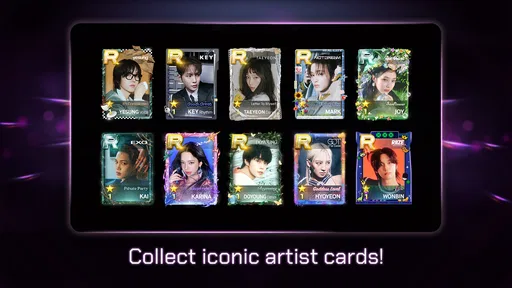
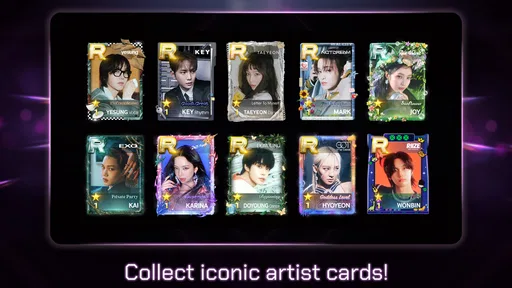
A unique aspect of SUPERSTAR SMTOWN is the card system. You collect and upgrade cards of your favorite artists, which can improve your scores and unlock new features. It's a nice touch for those who love customization and adds another layer of strategy to the game.
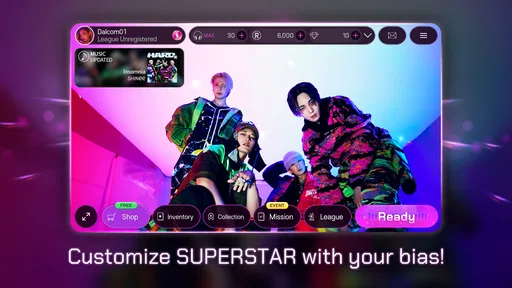
Building your deck is part of the fun, and the satisfaction of leveling up a rare card is real. Plus, you can personalize your profile with the cards you collect, showing off your collection to friends and other players. It's like Pokémon cards, but with K-pop idols.
When collection helps, and when it distracts
The card layer changes what a good session can look like. Sometimes I want to work on timing; other times I enjoy making a small amount of progress on the collection side. Those are related but different goals, so it helps to decide which one matters before opening the game. If I only care about improving at a particular song, chasing cards can pull attention away from practice. If collecting artist cards is part of the appeal, then that extra layer gives the rhythm play a longer-term focus.
I would also keep expectations grounded around progression. Better cards can contribute to scores, but they do not replace learning a chart or hitting its notes accurately. A player who enjoys both collection and skill-building gets the fuller experience; someone who dislikes upgrade systems may find this added layer more like a chore than a reward. The game is most appealing when those systems support the music rather than become the only reason to play.
What Keeps You Playing?
Aside from the addictive gameplay and the thrill of unlocking new cards, the app keeps you coming back with daily missions and events. There’s always something new to do, whether it's a limited-time event or a special mission that offers exclusive rewards. This constant stream of activities ensures that there's always a reason to log in and play.
Moreover, the community aspect is pretty strong. You can join a crew, which is essentially a group of players who can help each other out with tips and strategies. It makes the whole experience feel more connected and interactive.
Challenge, pacing, and the pressure to return
Daily tasks and events can make a short visit feel purposeful, but they also create a gentle pull to check in regularly. I see that as useful when I want a reason to play a song instead of opening the game without a plan. It is less appealing if I prefer games that let me disappear for a while without feeling that I have missed a time-sensitive activity. The healthiest way to approach those prompts is to treat them as optional direction, not a schedule I owe the game.
That distinction matters for younger or more casual players too. The game is rated for Everyone, so its basic audience is broad, but the card progression and event cadence may still be more engaging to someone who likes ongoing goals than to someone who wants a purely self-contained music game. It is free to start, while in-app purchases range from $0.99 to $89.99 per item. I would decide in advance whether I am happy to progress at my own pace; spending should not be confused with improving rhythm skills.
The game is made by Dalcomsoft, Inc. and has been available since Aug 14, 2014. Its current version is 3.29.4, and it needs Android 7.0 or later. It has a 4.3 average from around 249,000 ratings, with over 5 million installs and around 3,000 written reviews. Those figures suggest a well-established audience, but they do not tell me whether its particular mix of music, cards, and competitive play will suit an individual player.
Who will enjoy this particular rhythm game?
I would recommend it first to people who already listen to SMTOWN artists and want a hands-on way to spend time with that music. It also makes sense for rhythm-game players who like gradual improvement, replaying songs, and having a collection goal alongside score-chasing. The artist focus gives it a more personal feel than a game whose main draw is simply presenting unrelated tracks one after another.
I would be more cautious if you want a music app for passive listening, a rhythm game with no collection or event layer, or a soundtrack that spans many labels and styles. This is a game built around active input, so it asks for your attention rather than serving as background music. If precise tapping becomes frustrating, or if regular missions feel like an obligation, a more relaxed music experience is likely a better fit.
Final Thoughts
Overall, SUPERSTAR SMTOWN is a must-try for any K-pop fan or rhythm game enthusiast. It seamlessly combines addictive gameplay with a rich library of music from one of the world’s leading entertainment companies. The app is polished, constantly updated, and offers a community and competitive aspect that keeps you engaged.
Whether you're a casual player looking to enjoy some music or a hardcore gamer aiming to top the leaderboards, there's something here for everyone. So, if you haven't already, give it a shot. You might find yourself tapping along to your favorite tunes more than you'd expect!
My progression verdict
What works best for me is the way several modest aims sit beside each other: learning a song, getting steadier at a chosen difficulty, improving a score, building artist cards, or taking part in an event. That variety can keep sessions fresh without changing the core rhythm-game feel. The trade-off is that a player can feel pulled between practice, collection, and timed activities, so choosing one focus per session makes the experience easier to enjoy.
I would start with familiar tracks and a comfortable difficulty, then raise the challenge only when the notes feel controlled rather than lucky. I would use the cards as a supporting goal, not as a substitute for getting better at the music. With that approach, the game’s progression has a satisfying pace for fans who enjoy both K-pop and rhythm challenges. If the artist catalogue is not your draw, or you would rather avoid ongoing goals and purchases altogether, I would choose a simpler alternative instead.
Verdict
Strengths of SUPERSTAR SMTOWN
- Engaging rhythm gameplay with K-pop hits.
- Regular updates with new songs and events.
- User-friendly interface and smooth navigation.
- Global leaderboard fosters competition.
- Offline mode available for practice.
Limitations of SUPERSTAR SMTOWN
- In-app purchases can be costly.
- Requires stable internet for events.
- Some ads can interrupt gameplay.
- High battery consumption during play.
- Limited song selection without purchases.
Other Releases by Dalcomsoft, Inc.
View All
SUPERSTAR JYPNATION
Music4.7

SUPERSTAR STARSHIP
Music4.7

SUPERSTAR ATEEZ
Music4.9

SUPERSTAR WAKEONE
Music4.3
Similar Picks in This Category
View All
Tiles Hop Music & Ball Game
AMANOTES PTE. LTD.4.3

Magic Tiles 3™ - Piano Game
AMANOTES PTE. LTD.4.6

Real Piano
Bilkon3.7

Piano Game: Classic Music Song
Dream Tiles Piano Game Studio4.0

Smash Colors: Music Ball Rush
BADSNOWBALL HONGKONG LIMITED4.2

Piano Music Go-EDM Piano Games
Joy Journey Music Games4.5
Frequently Asked Questions
What is SUPERSTAR SMTOWN?
SUPERSTAR SMTOWN is a rhythm game featuring songs from popular artists under SM Entertainment. Players tap notes in time with music from K-pop bands and solo artists like EXO, Red Velvet, and NCT. The game combines music with competitive elements, allowing players to collect cards and compete against others.
Is SUPERSTAR SMTOWN free to play?
Yes, SUPERSTAR SMTOWN is free to download and play. However, it offers in-app purchases for items such as card packs and game currencies that can enhance the playing experience. Players can choose to spend money to progress faster or access exclusive content, but it is not necessary to enjoy the game.
What are the system requirements for SUPERSTAR SMTOWN?
For Android devices, SUPERSTAR SMTOWN requires Android 4.1 or higher, and for iOS devices, it needs iOS 9.0 or later. The game is relatively lightweight, but a stable internet connection is required to play. Make sure you have enough storage space and check compatibility with your device before downloading.
How does the card collection system work in SUPERSTAR SMTOWN?
In SUPERSTAR SMTOWN, players collect cards representing different artists and songs. These cards come in various grades, from C to R, with higher grades offering better in-game performance boosts. Cards can be obtained through gameplay, events, or purchased with in-game currency. Collecting and upgrading cards is a key element of the game strategy.
Can I play SUPERSTAR SMTOWN offline?
No, SUPERSTAR SMTOWN requires an internet connection to play. The game regularly updates with new songs, events, and leaderboards that necessitate online connectivity. This ensures players have access to fresh content and can compete with others globally. Make sure to have a reliable internet connection to enjoy uninterrupted gameplay.
Play our best games!


